Somtow Method
The Somtow Method: not just how to play, but why.
It began with a request. In 2010, a group of gifted young Thai musicians came to the Thai-American composer, conductor and novelist Somtow Sucharitkul. They wanted to play real music: whole symphonies, the kind of concerts they could watch online but never take part in at home. They already had the technique, learned from some of the best teachers in the country. What they were missing, Somtow believed, was what lies underneath it.
"They were well versed in the how of music," he said. "What we needed was to show them the why."
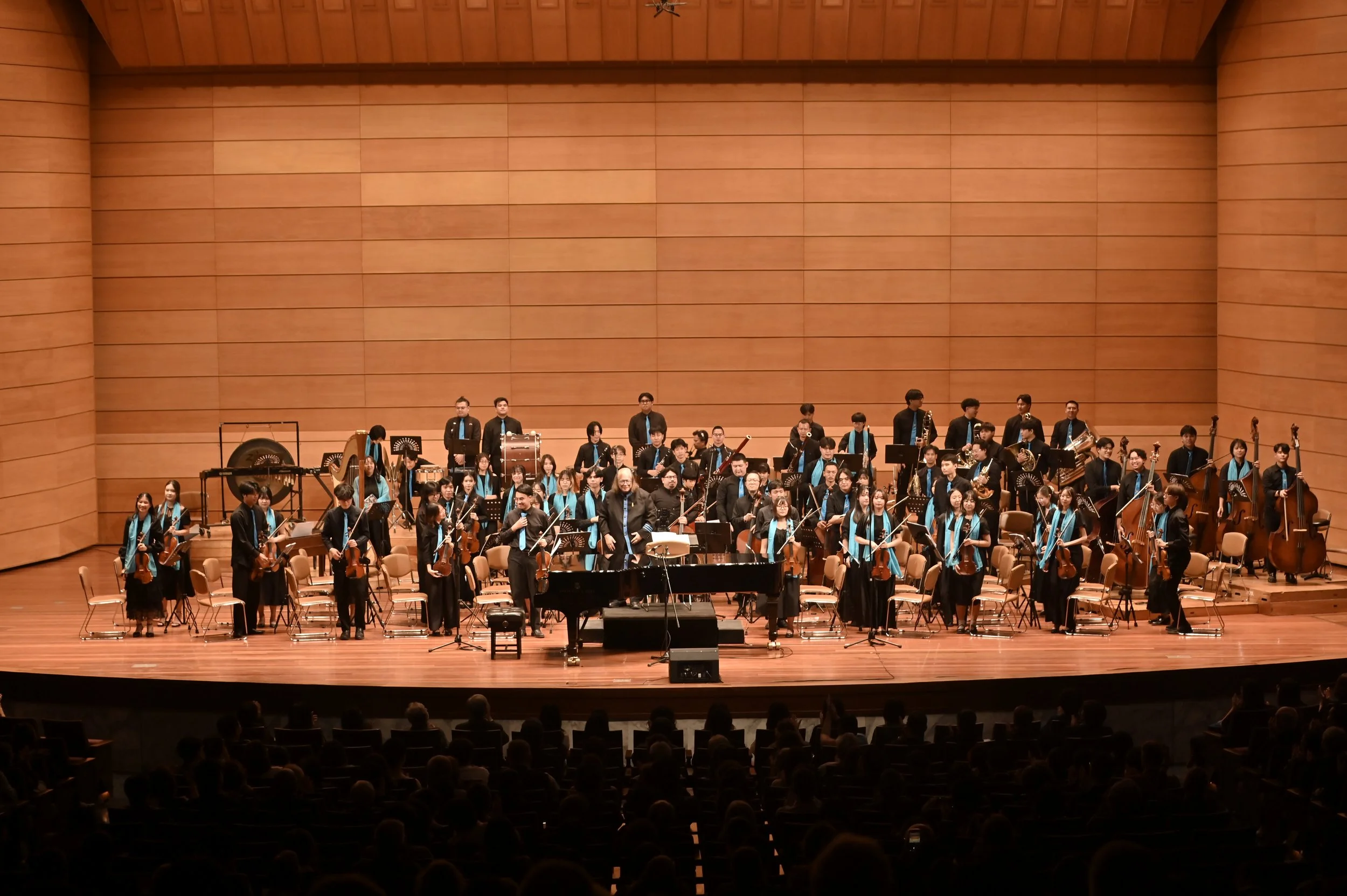
To show them, he created a new way of teaching, known today as the Somtow Method. It is the foundation of the Siam Sinfonietta, the youth orchestra he founded that year with conductor Trisdee na Patalung and the Bangkok Opera Foundation.
The Somtow Method does not replace traditional music teaching. It builds on it. "It's a means of expanding the context," as the orchestra puts it, "of getting into the real nature of who we are and of music's place in our world." Players keep learning technique from their own teachers. In the Sinfonietta, they learn what that technique is for.
The why behind the how
Every piece begins with questions. Why was it written? What did it mean to the person who wrote it, and to the world that first heard it? Before players perform a work, they explore its history, its philosophy and the subtext behind the notes, so that what they play comes from understanding and not from the page alone.
Living inside the music
The method asks for complete immersion in the culture, history and personal experiences of the composer. Before the orchestra played Mahler in Vienna, Somtow took the players to the Bohemian countryside where Mahler grew up, to hear for themselves the sounds of nature that run through his music. Along the way they played in small Czech churches and village inns to absorb the essence of what the music was about. The same idea guides how they approach style. The players learn to play in a historically informed way, to recreate the sound worlds that Mozart and Beethoven themselves imagined.
Real music, played for real
The Sinfonietta does not play simplified arrangements. Its players take on the "grown-up" repertoire that youth orchestras rarely attempt, from Monteverdi to Ligeti, including the symphonies of Mahler and all three of Stravinsky's great ballets. They also play in the pit for Opera Siam's productions.
Listening to one another
A great orchestra is more than a group of good players. Members of the Sinfonietta learn not only to master their own parts but to listen closely to one another, so the orchestra breathes, shapes and phrases as one.
What it has achieved
The results came faster than anyone expected. In 2012, only two years after it was founded, the Siam Sinfonietta won first prize at the Summa Cum Laude International Youth Music Festival in Vienna, playing Mahler to a Viennese jury. Since then it has played Carnegie Hall three times, as well as Walt Disney Concert Hall, the Musikverein in Vienna, the Konzerthaus Berlin and the Festival junger Künstler Bayreuth. Many of its alumni now play in Thailand's professional orchestras, including the Siam Philharmonic.
The method goes on today. Each year the Sinfonietta holds auditions for musicians aged 12 to 25, and every place is funded by a full scholarship. Talent is the only requirement. Each new generation learns what the first one did on those Saturday mornings in 2010: how to play, and also why.